Violin Lessons: A Beginner's Guide to Choosing the Right Teacher and Learning Faster
Violin Lessons: A Beginner's Guide to Choosing the Right Teacher and Learning Faster
Learnico EN
Practitioner-writer
Violin Lessons: A Beginner's Guide to Choosing the Right Teacher and Learning Faster
The violin has a reputation for being tricky to pick up, and honestly, that reputation is fair. Holding the instrument correctly, controlling the bow, and coaxing out a clean sound all take time and patience. That's normal, and it doesn't mean you're not cut out for it.
The good news is that starting violin lessons with the right teacher, realistic expectations, and a steady practice habit makes the whole process far less intimidating. This guide walks you through comparing lesson formats, understanding what things cost, choosing a teacher you'll actually enjoy working with, and knowing what progress looks like over your first three months.
Why Violin Lessons Make a Difference for Beginners
Trying to teach yourself violin from videos alone is possible, but it's a bit like trying to learn a language just by reading — you can pick up bits and pieces, but the details that actually matter tend to slip through. Posture, left-hand position, bow hold, rhythm, and intonation all interact with each other, and it's genuinely hard to catch your own mistakes when you don't yet know what "correct" feels like.
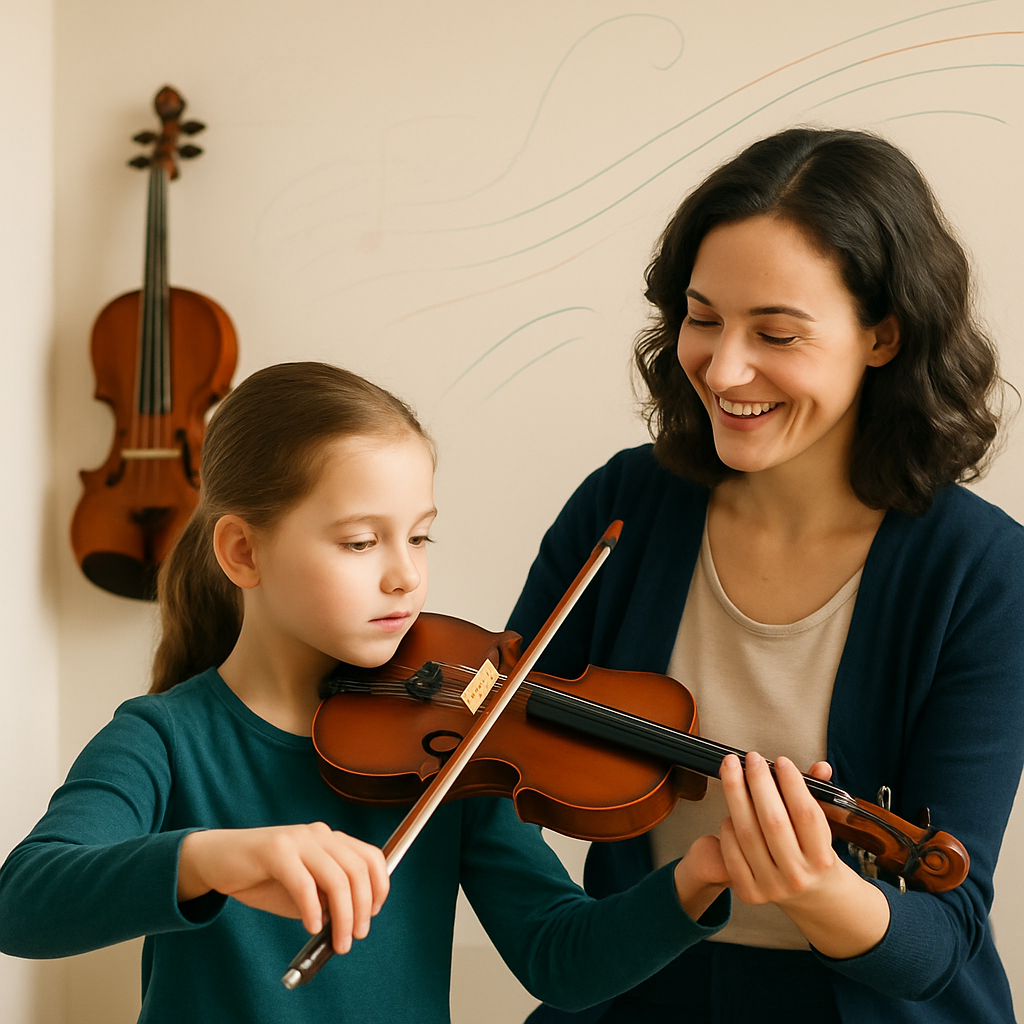
This is where a teacher earns their value early on. A great violin teacher will help you build good habits before they become difficult to change. Fixing a tense bow hold or a collapsed wrist after months of practice usually takes longer than learning it properly from day one.
It's also worth saying clearly: lessons aren't just for children or aspiring professionals. Plenty of adults start violin lessons purely because they've always wanted to play, want to join a community orchestra one day, or simply enjoy the challenge of learning something new. Age isn't the deciding factor — consistency and good guidance are.
What a beginner violin teacher should help you with
- Holding the violin and bow comfortably, without unnecessary tension
- Producing a clear, steady tone instead of a scratchy or thin sound
- Reading basic notation and rhythm at a manageable pace
- Learning simple songs step by step, building confidence along the way
- Building a realistic home practice routine that fits your schedule
Online vs. In-Person Violin Lessons: Which Option Is Right for You?
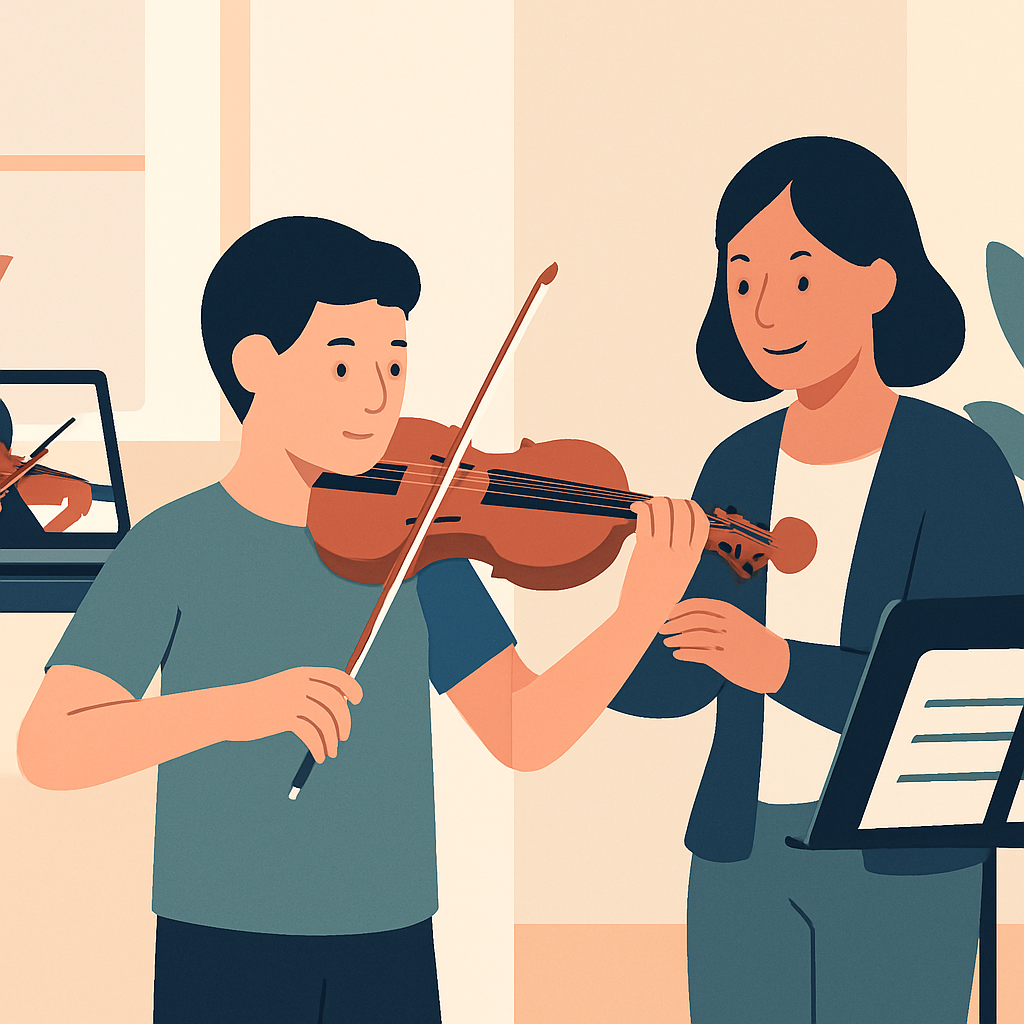
There's no single "better" format here — it really depends on who's learning, what they're working with, and what kind of feedback helps them most. In-person violin lessons make it easier for a teacher to physically adjust your bow hold or check your posture from different angles. Online lessons, on the other hand, open up a much wider pool of teachers and tend to fit more easily around a busy week.
Parents choosing lessons for a child, and adults trying to fit lessons around work or study, often end up weighing this differently, and that's fine. There isn't a wrong answer, just the one that suits your situation.
When in-person lessons may be a better fit
- Young beginners who benefit from more hands-on physical guidance
- Students who stay more accountable with face-to-face structure
- Learners who have access to a good local teacher
- Beginners who are struggling specifically with posture or bow technique
When online violin lessons can work well
- Busy schedules, or limited teacher options nearby
- Adults who prefer the convenience of learning from home
- Students looking for a teacher with a specific style, method, or specialism
- Learners who are comfortable using video calls and sending practice recordings
| Factor | Online violin lessons | In-person violin lessons |
|---|---|---|
| Flexibility | High | Depends on location and schedule |
| Teacher choice | Wider, including teachers outside your area | Limited to local options |
| Posture feedback | Effective with good camera positioning | Easier for hands-on observation |
| Travel time | None | Required |
| Typical suitability | Independent teens and adults | Young children and hands-on learners |
How to Choose the Right Violin Teacher
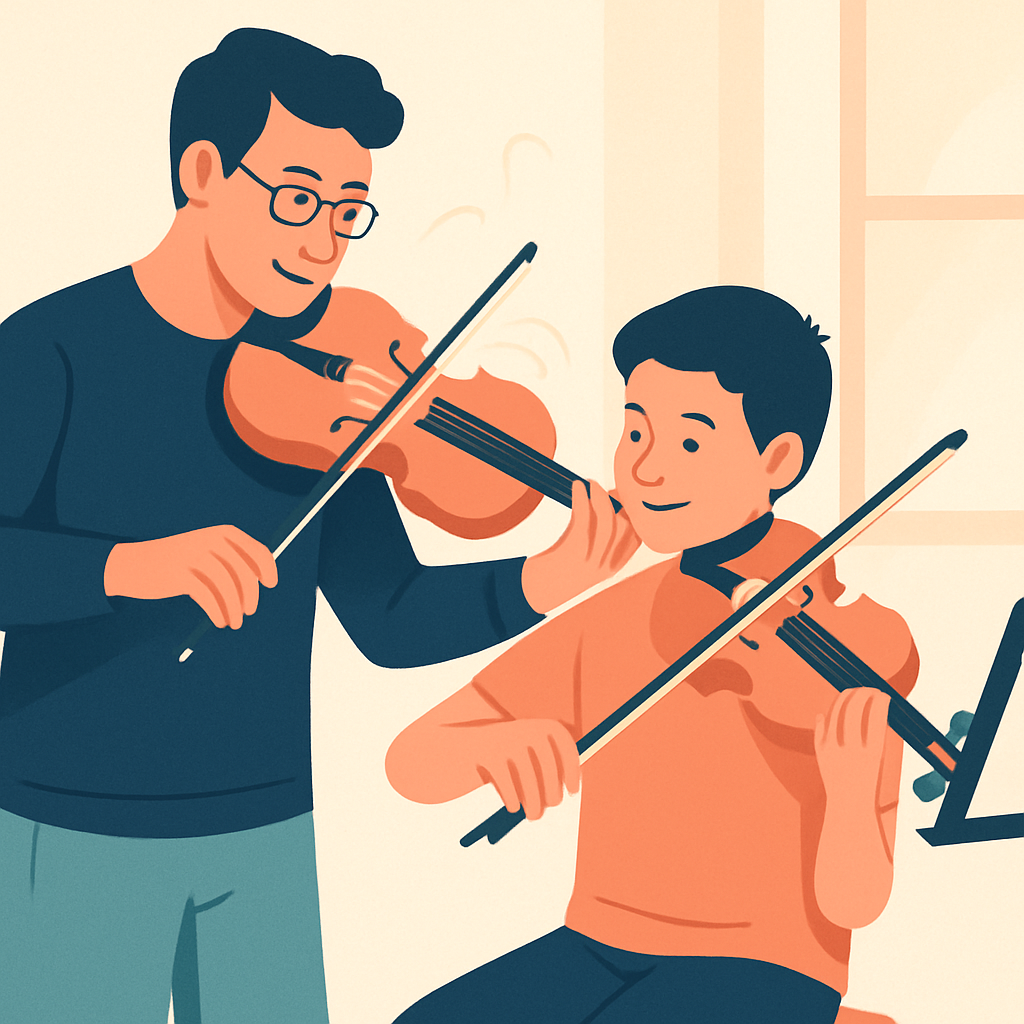
It's tempting to assume that the most impressive performer will also be the best teacher, but that's not always true. Beginners need someone who can explain technique in plain language, adjust their approach when something isn't clicking, and keep lessons encouraging rather than stressful.
Before booking, it helps to look at a teacher's profile in detail — their experience with beginners specifically, qualifications, the lesson formats they offer, availability, and what past students say about working with them. This is exactly the kind of comparison that gets easier when you can Find a private music teacher on Learnico and browse violin teachers on Learnico side by side, rather than relying on a single referral or a quick online search.
Questions to ask before your first violin lesson
Questions to ask before booking:
- Do you teach complete beginners?
- What age groups do you usually teach?
- Do you offer online, in-person, or both types of lessons?
- What does a typical beginner lesson look like?
- Which method books or learning materials do you recommend?
- How much practice do you expect each week?
- Can I book a trial or introductory lesson?
- How do you adapt lessons to a student's goals?
Signs of a good beginner teacher
A good fit usually shows up in small ways: clear communication instead of jargon, patient feedback rather than frustration, achievable short-term goals, a structured lesson plan, and encouragement that doesn't rely on unrealistic promises about how fast you'll progress.
Try a first lesson before committing to a long package if you're unsure about the teacher's approach. Most teachers are happy to offer this, and it tells you far more than a profile description ever could.
How Much Do Violin Lessons Cost?
Pricing for violin lessons varies quite a bit depending on your location, the teacher's experience, lesson length, and whether you're learning online or in person. There's no single "correct" number, so it's more useful to think in ranges and check local listings for a realistic picture.
The lesson fee itself is also only part of the budget. You'll likely need to factor in an instrument, bow, shoulder rest, rosin, a tuner or tuning app, a music stand, method books, and potentially exam fees down the line if you decide to pursue grades.
| Item | Typical cost range | Notes |
|---|---|---|
| 30-minute lesson | $20–$50+ | Often suitable for younger beginners |
| 45–60-minute lesson | $40–$100+ | Common for teens and adults |
| Violin rental | $15–$50 per month | A practical option before buying |
| Beginner violin outfit | $150–$500+ | Include violin, bow, and case where possible |
| Method book and sheet music | $10–$40 | Depends on teacher recommendations |
| Accessories | $20–$80 | Rosin, shoulder rest, tuner, stand, etc. |
You do not need an expensive instrument to begin, but you do need one that is comfortable to play and properly set up. A well-adjusted rental violin is often a smarter first step than a very cheap instrument that's difficult to tune or keep in playing condition.
Your First 30, 60, and 90 Days of Violin Practice
It's worth setting expectations early: beginner progress isn't about rushing toward difficult pieces. It's about laying foundations — posture, bow control, basic note-reading — that make everything you learn afterward click into place more easily.
Short, focused practice sessions tend to beat occasional marathon ones. For most beginners, 15–20 minutes a day is a solid starting point, though this should flex based on age and your teacher's specific recommendations.
| Timeframe | Main focus | What progress may look like |
|---|---|---|
| First 30 days | Posture, bow hold, open strings, simple rhythms | Producing cleaner sounds and playing short exercises |
| Days 31–60 | Left-hand placement, basic notes, simple melodies | Playing easy tunes with steadier rhythm |
| Days 61–90 | String crossings, intonation, musical phrasing | Connecting short pieces and building confidence |
A simple weekly practice routine
- 3–5 minutes: tune the violin and review posture
- 5 minutes: bowing exercises on open strings
- 5–10 minutes: scales or note-reading practice
- 5–10 minutes: current piece or song
- 2 minutes: repeat the most challenging section slowly
Common Beginner Challenges—and How to Work Through Them
Squeaky sounds, a shaky bow arm, missed notes, slow reading — these are part of learning the violin, not signs that something's wrong with you. Almost every violinist went through the exact same stage.
Bow control and scratchy sounds
Scratchy tone is often about bow speed and pressure rather than lack of skill. Try slowing the bow stroke down, easing off the pressure slightly, and keeping the bow between the bridge and the fingerboard — this alone fixes a surprising number of tone issues.
Posture and tension
Tension tends to build up quietly in the shoulder, neck, or wrist without you noticing at first. If something feels uncomfortable or sore, mention it to your teacher rather than pushing through it — discomfort is worth addressing early, not later.
Motivation and consistent practice
Small weekly goals work better than vague long-term ones. Track your practice sessions, record yourself occasionally to hear your own progress, and make sure some of your practice time goes toward music you actually enjoy — not just technical exercises.
Find Violin Lessons That Fit Your Goals
Progress in violin comes down to a fairly simple combination: a teacher who explains things clearly, a lesson format that actually fits your life, and practice that happens consistently — even in short bursts. Don't wait until you have the "perfect" instrument, schedule, or starting skill level. That moment rarely arrives on its own.
If you're ready to take the next step, you can compare teacher profiles and lesson options on Learnico and find someone whose teaching style, availability, and experience match what you're looking for.
Ready to start learning? Explore violin teachers on Learnico, compare lesson options, and find a tutor who matches your goals, schedule, and preferred way of learning.